Noi Bai International Airport (HAN) station
Tip: The nearest airport to Ninh Binh, about 95-100 km away.
Open in Google MapsPrices checked November 2026. If a price at the ticket counter differs from this guide, the counter price is the one that counts.
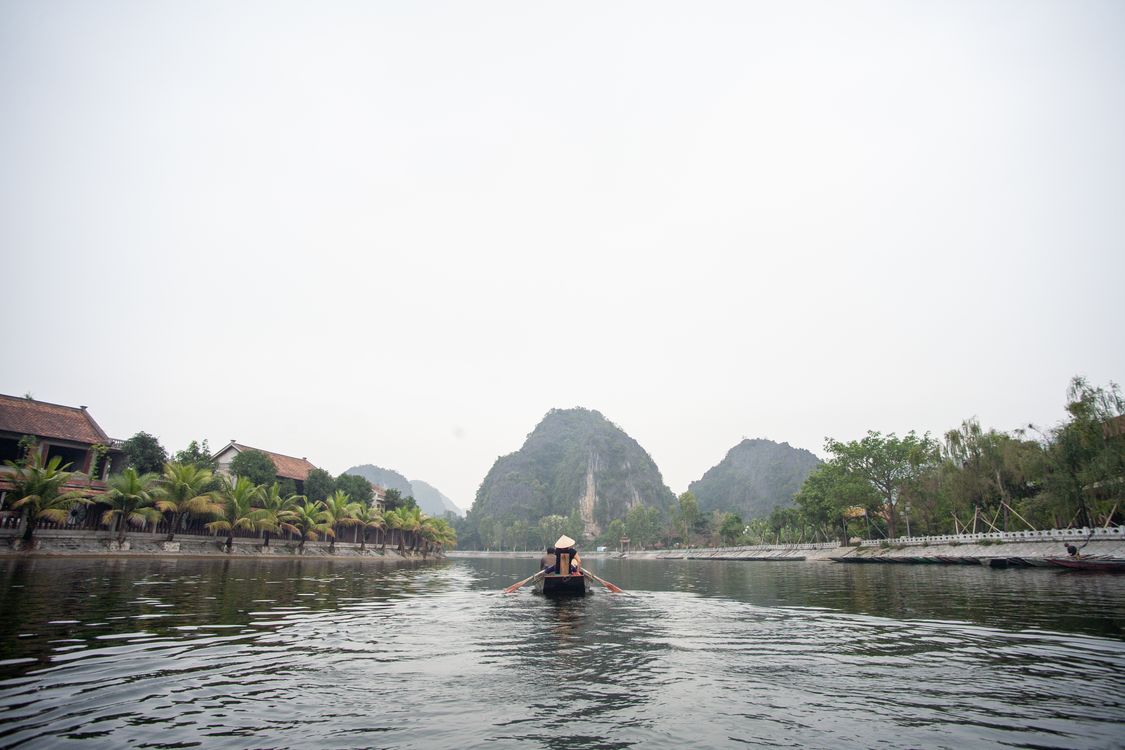
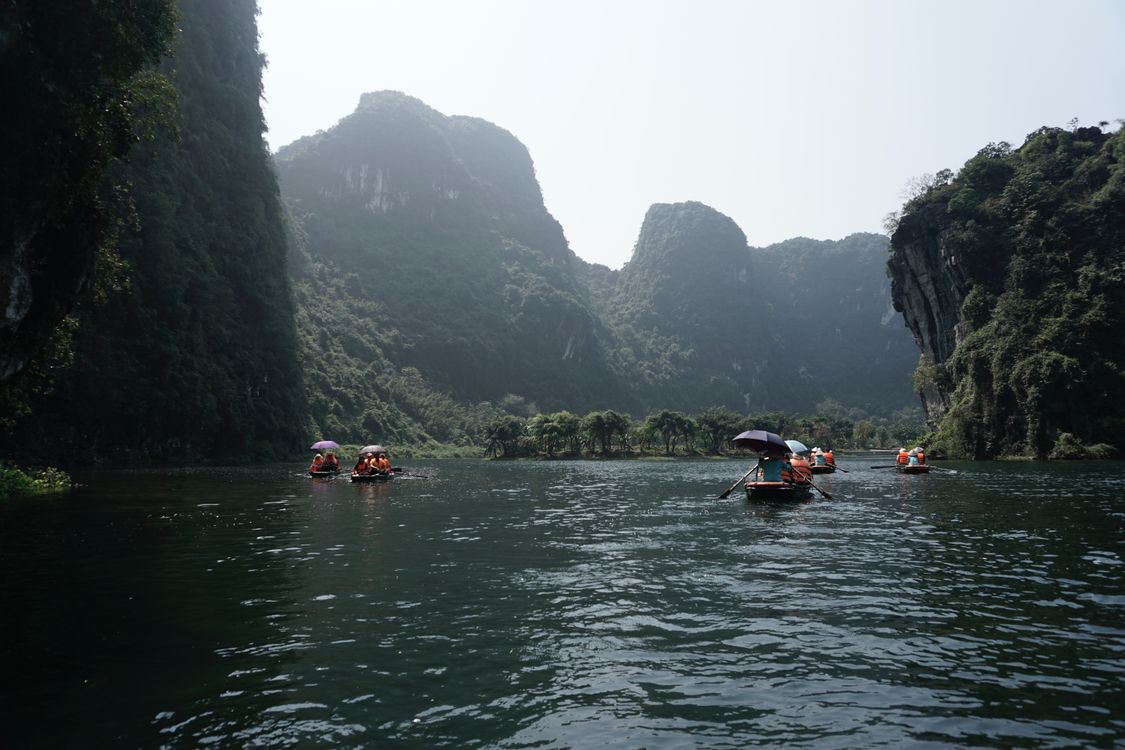

Ninh Binh sits about 95-100 km south of Hanoi, on the southern edge of the Red River Delta. Its heart is the Trang An Landscape Complex: sheer limestone mountains wrapped around rivers, water caves and rice fields — a landscape so like Ha Long Bay that people call it "Ha Long Bay on land." In 2014, Trang An became a UNESCO World Heritage Site, the first mixed cultural and natural heritage site in Southeast Asia.
What makes Ninh Binh so easy to love is how close everything is. Trang An, Tam Coc, Hang Mua, Bich Dong and the ancient capital of Hoa Lu all sit within about 10 km of each other around Tam Coc, so you can see a lot without spending your days in a car. Bai Dinh Pagoda and Van Long Lagoon sit in a northern cluster about 15-20 km away, and Cuc Phuong National Park is about 45 km west — a good third-day trip of its own.
How many days? One day from Hanoi is enough for one boat ride plus Hang Mua, but it will feel rushed and you will hit the busiest hours. Two days and one night is the sweet spot: both boat rides, Hang Mua, Hoa Lu, and a slow morning cycling through the villages. Three days lets you add Cuc Phuong or the Bai Dinh and Van Long cluster at a relaxed pace, which suits families and nature lovers.
The best time to come depends on what you want. Late May to early June is the most photogenic season of the year, when the rice along the Ngo Dong River in Tam Coc turns golden — but it is hot, 30-35°C, so take the early boat. September to November and January to March are cooler and drier, with fewer crowds. June to August is green and lush, with lotus season at Hang Mua, but expect sudden afternoon rain. January to March is festival season at Bai Dinh Pagoda and Hoa Lu, which is wonderful and very crowded, especially around Tet (Lunar New Year).
Ninh Binh suits first-timers who want mountains and rivers without a long flight, couples who like homestays between rice fields, families with children (short drives, sights close together), and backpackers who want to explore by bicycle on a small budget. It suits you less if you are looking for beaches or buzzing nightlife — Ninh Binh is quiet, and it goes to sleep early.
One note on names: since 1 July 2025, Ninh Binh merged with Ha Nam and Nam Dinh provinces into an expanded Ninh Binh Province, and many old district and commune names changed to new wards and communes (the town center is now in Hoa Lu, Tay Hoa Lu and Nam Hoa Lu wards). Many maps, road signs and booking sites still use the old names like "Ninh Binh City," "Hoa Lu District" or "Ninh Hai Commune," so this guide keeps the familiar names alongside the area so you can match both.
Ninh Binh has no airport. International visitors fly into Hanoi (Noi Bai Airport) and continue about 95-100 km south by train, limousine or car on the Phap Van - Cau Gie - Ninh Binh expressway. From Ho Chi Minh City, the realistic route is to fly to Hanoi first and continue from there; flight prices change with the airline and booking time, so check again when you plan — this guide does not fix a flight price.
By train, the Reunification Express (SE trains) runs from Hanoi Station to Ninh Binh Station in about 2 hours 15 minutes. Soft seats with air conditioning cost around 116,000-150,000 VND (~$4-6), with the full range about 100,000-230,000 VND (~$4-9) depending on seat class. The two most useful morning trains in the 2026 published schedule are SE7, leaving around 06:00 and arriving around 08:17 (in time for a quiet morning boat at Trang An), and SE5, leaving around 08:55 and arriving around 11:11. Evening trains run back to Hanoi. Train times can change by season — check and book on the official Vietnam Railways site (dsvn.vn) or at the station, and book ahead on weekends and holidays because soft seats sell out early.
By limousine, 9-seat vans pick you up at your hotel in the Old Quarter and drop you right at Tam Coc or Trang An in 1.5-2 hours, for 180,000-350,000 VND (~$7-13) per person one way. This is the most convenient option for first-timers. Two things to watch: vans collect passengers for 30-45 minutes around the Old Quarter, so the trip can take longer than advertised, and always confirm the drop-off point — "drop me at my hotel in Tam Coc" is very different from "drop me at the bus station in town." Book the return trip when you book the outbound one on weekends and in rice season (May-June), because vans back to Hanoi fill up early.
Named limousine operators on this route include Hoang Long Limousine (9–11 seats, hotel pickup in the Old Quarter, 200,000–280,000 VND / ~$8–11 per person one way), Minh Tam, Ninh Binh Excursion and Hung Thanh (limousine vans with Old Quarter pickup, 250,000–350,000 VND / ~$10–13), A21 Tours and Xuan Truong Limousine (200,000–350,000 VND / ~$8–13), and APT Travel Limousine (book via 12go). Check on 12Go/Vexere before booking.
By public bus, buses from Giap Bat, My Dinh or Nuoc Ngam stations in Hanoi take 2-2.5 hours and cost 80,000-120,000 VND (~$3-5). It is the cheapest way, but you arrive at Ninh Binh Bus Station and still need to travel 5-7 km into Tam Coc.
Named operators for the regular bus include Hoang Long, Duc Phuc and Thanh Buoi, all from Giap Bat station, at 90,000–120,000 VND (~$3.50–5) per person.
By private car or Grab car, the trip takes 1.5-2 hours and costs 1,100,000-2,200,000 VND (~$42-85) per car one way, depending on the car and the deal. That works well for families, groups of 3-4, or anyone with a lot of luggage.
Tip: The nearest airport to Ninh Binh, about 95-100 km away.
Open in Google MapsTip: Take SE7 around 06:00 to arrive in time for a quiet morning boat.
Open in Google MapsTip: This is the passenger station, in use since 2015. The old station at Lane 41 Hoang Hoa Tham is now a freight station — some old booking sites still list it, so do not go there for passenger trains.
Open in Google MapsTip: Buses from Hanoi arrive here; Tam Coc is another 5-7 km on.
Open in Google MapsTip: One of three Hanoi bus stations with buses to Ninh Binh.
Open in Google MapsTip: One of three Hanoi bus stations with buses to Ninh Binh.
Open in Google MapsTip: One of three Hanoi bus stations with buses to Ninh Binh.
Open in Google MapsThe sights are close together, so a motorbike and a bicycle will cover almost everything. Motorbike rental costs 100,000-150,000 VND (~$4-6) per day (manual bikes are cheaper than scooters), fuel is your own. Renting from your homestay is the most common way. Foreign visitors need a valid International Driving Permit (IDP) plus their home licence, and you must wear a helmet. Check the brakes and lights and photograph the bike before you take it.
Bicycles cost 30,000-50,000 VND (~$1-2) per day, and many homestays lend them free. The flat roads around Tam Coc, Bich Dong and Hang Mua are perfect for cycling through the rice fields — best early in the morning or after 16:00.
Grab and Xanh SM do operate in Ninh Binh, but there are far fewer cars than in Hanoi. Getting a car in the town center and around Tam Coc is usually easy, but calling one from a quiet spot like Am Tien or Van Long late in the afternoon can take a long time or fail altogether. Fares show in the app before you book.
Traditional taxis run on the meter at about 15,000-18,000 VND (~$0.60-0.70) per km. Ask the driver to turn on the meter, or agree a fixed price before you get in. A Tam Coc to Trang An ride costs roughly 100,000-150,000 VND (~$4-6) as a reference. Verified taxi switchboard numbers (checked against multiple sources, 06/11/2026): Mai Linh 0229 625 2525 (secondary number 0229 6251 888), Taxi Ninh Binh 0229 3633 788, Taxi Xuan Thanh 0229 368 6868, Taxi Hoa Lu 0229 2211 444. Call the switchboard for a metered car with published fares, and skip unmarked cars touting for business at the piers.
A private car with a driver for the day costs around 1,000,000 VND (~$38). That suits families, older travelers, or a day combining Bai Dinh and Van Long. Ask your hotel to book it and confirm the route and price in writing or by message first.
The smartest way to spend two days: stay in Tam Coc, use a bicycle and your feet on day one around the Tam Coc cluster (boat pier, Bich Dong and Hang Mua are all within cycling distance), then rent a motorbike or a car on day two for the Trang An and Hoa Lu cluster (plus Bai Dinh if you still have energy). That way you only pay for a rental for one day.
Ticket prices below were checked on 06/11/2026. Trang An raised its price from 250,000 to 300,000 VND on 01/01/2026 — many old articles online still show 250,000 VND. Tam Coc is often confused between a "gate ticket only" and a combined ticket; the price in use in 2026 is the combined ticket of 250,000 VND per person. Before your trip, look at the price board at the official ticket counter of each site; if the counter price differs from this guide, the counter price is the one that counts.
| Place | Adult ticket | Hours | Time to allow |
|---|---|---|---|
| Trang An (boat) | 300,000 VND (~$12); children 1-1.3 m: 150,000 VND; under 1 m: free | Daily about 07:00-17:00; last boat about 16:00 | 2.5-3.5 hours by route |
| Tam Coc - Bich Dong (boat) | 250,000 VND (~$10) including sightseeing + boat; package with electric car to Thai Vi Temple, Tien Cave and Bich Dong Pagoda: 350,000 VND (~$13); children 1-1.3 m: 120,000 / 190,000 VND | Ticket sales about 07:30-17:00 | Boat 1.5-2 hours; plus Bich Dong: half a day |
| Hang Mua | 100,000 VND (~$4) per most 2026 sources — some newer sources say 150,000 VND, check at the gate | Daytime; climb before 09:00 or after 15:30 | 1-1.5 hours (nearly 500 steps up and down) |
| Bai Dinh Pagoda | Entry free; electric car about 60,000-100,000 VND (~$2-4) return depending on route (sources do not agree); Bao Thap tower ticket about 60,000 VND (~$2) | About 06:00-22:00 | 3-4 hours |
| Hoa Lu Ancient Capital | 20,000 VND (~$1); children 6-15: 10,000 VND | Daytime | 1-1.5 hours |
| Cuc Phuong National Park | 60,000 VND (~$2); students: 20,000 VND; children: 10,000 VND | Daytime; enter early in the morning | A full separate day |
| Van Long Lagoon | About 80,000-100,000 VND (~$3-4) including sightseeing + boat (sources split the price differently — check at the pier) | Daytime; best 15:30 to sunset | 1.5-2 hours |
| Am Tien Cave (Tuyet Tinh Coc) | About 50,000 VND (~$2) (reference price, not verified from an official source) | Daytime | 45-60 minutes |
A hand-rowed sampan takes you through a system of water caves, flooded valleys and small temples tucked between limestone mountains. There are 3 main routes at the same ticket price, each about 2.5-3.5 hours, passing a different mix of caves and temples; you choose your route at the ticket counter. Trang An is run more tightly than Tam Coc: tickets sell at the official counter, boats run in turns, and there is far less touting.
Arrive at the pier at 07:00-08:30 or after 14:30 to avoid the crowds. Between 09:00 and 13:00 the day-tour groups from Hanoi arrive and you will queue for a long time. The best light is early morning — mist on the water and low sun across the cliffs. Bring a hat, sunscreen and drinking water; there is almost no shade on the boat.
Tip: Go at 07:00-08:30 for mist on the water and the shortest queue.
Open in Google MapsA small boat from Van Lam Pier glides down the Ngo Dong River through three caves (Hang Ca is the longest, Hang Hai, and Hang Ba is the lowest and darkest) between rice fields right at the water's edge. The rowers here are famous for rowing with their feet. From the pier, cycle about 2-2.5 km to Bich Dong Pagoda — a temple built against the cliff face with three levels (Lower, Middle and Upper pagodas); the combined Tam Coc ticket already covers this stop on the electric-car route.
If you can only visit one place, choose Tam Coc if you love rice-field scenery and are staying in Tam Coc. Choose Trang An if you want a longer boat trip, tidier organization and less hassle.
The best hours are 07:30-09:00 (cool, few boats) or after 15:00. Midday is harsh sun with no shade on the river.
Know this before you go so it does not spoil your day: at Tam Coc, some rowers and floating vendors have a habit of offering souvenirs and drinks "for the rower" mid-trip, and pressing for a tip quite insistently at the end — the most common complaint from international visitors here. Trang An has far less of this. How to handle it is in section I: say "No, thank you" once, firmly and politely, and if you want to tip, give 50,000-100,000 VND (~$2-4) per boat when you step ashore as a voluntary thank-you — nobody has the right to demand a fixed amount.
Tip: Best 07:30-09:00 or after 15:00; late May to early June the rice turns golden.
Open in Google MapsTip: Before 08:00 it is mostly local worshippers — a different place from the midday crowds.
Open in Google MapsNearly 500 stone steps (many sources say 486) climb to the top of Ngoa Long Mountain, where a dragon statue stands and two views open up: one down over the Tam Coc valley and the Ngo Dong River, the other out over the fields and the lotus lake at the foot of the mountain. The climb takes 20-30 minutes; the steps are steep and slippery when wet, and not a good idea if you have bad knees.
The best photo times are sunrise (reach the top before 06:30 in summer) and sunset. Midday is hot, crowded, and the light bounces off the rice fields. A smart pairing: boat at Tam Coc in the morning, climb Hang Mua at 16:00 for sunset — the two are about 4 km apart. At the foot of the mountain there is a lotus lake (in full bloom around June-July) with a wooden walkway through it — a photo spot of its own, no climb needed.
Tip: Sunset from the top is the classic Ninh Binh photo; the lotus lake below blooms in June-July.
Open in Google MapsBai Dinh has an old temple on the mountain (from the 12th century, linked to the monk Nguyen Minh Khong) and a huge new temple complex built from 2003, among the largest in Southeast Asia: a long Arhat corridor, many large Buddha statues and a tall Bao Thap tower. The grounds are so wide that the electric car is almost essential — entry is free, but the real cost is the electric car and the Bao Thap ticket.
Go early in the morning (before 08:30) to avoid pilgrim groups, especially in January to March of the lunar calendar. Dress modestly: covered shoulders, below the knee (see section J). If your clothes do not fit the rule, you may have to buy or rent a shawl at the gate.
Be honest with yourself here: Bai Dinh divides people. If you love scale, you will be impressed; if you are looking for quiet, ancient calm, the new complex can feel too grand. If you only have two days and no spiritual reason to go, you can skip Bai Dinh and spend the time at Cuc Phuong or Van Long instead.
Tip: Go before 08:30; dress with covered shoulders and below the knee.
Open in Google MapsHoa Lu was the capital of Dai Viet from 968 to 1010, under the Dinh and Early Le dynasties, before Ly Thai To moved the capital to Thang Long (today's Hanoi). The main sights are the temples of King Dinh Tien Hoang and King Le Dai Hanh, standing side by side in a valley ringed by limestone mountains. The ticket is only 20,000 VND, the visit takes 1-1.5 hours, and it pairs perfectly with Trang An in one morning because the two are only a few km apart.
Tip: Pair it with a morning Trang An boat — they are only a few km apart.
Open in Google MapsCuc Phuong is Vietnam's first national park, about 45 km west of central Ninh Binh. The highlights are the Endangered Primate Rescue Center, walking trails through primary forest to thousand-year-old trees, and prehistoric caves. The famous white butterfly season (usually around April-May, depending on the weather each year — ask your hotel or the park office before you go) is the best-known experience here.
Plan a full day: leave before 07:30, wear closed walking shoes, bring insect repellent and a light rain jacket. Some services inside the park (guides for long trails, the rescue center's fixed visiting hours) need to be registered at the gate — check the day's schedule when you arrive.
Tip: Leave before 07:30 and bring insect repellent; ask about the butterfly season (usually April-May).
Open in Google MapsVan Long is a large wetland reserve, its water so flat and still it is called "the bay without waves." A small boat rows for about 1-1.5 hours between reeds and cliffs, with a chance to see water birds and, if you are lucky, the rare white-rumped langur on the cliff face. There are far fewer visitors here than at Trang An and Tam Coc.
The best time is 15:30 to sunset, when the water mirrors the mountains and birds fly home to roost. Van Long sits in the same northern cluster as Bai Dinh (about 15-20 km from Tam Coc) — visiting both in one afternoon and morning works well.
Tip: Go late afternoon for mirror-still water and birds flying home.
Open in Google MapsAm Tien Cave (Tuyet Tinh Coc) is a clear blue lake in a rocky valley a few km from Trang An; allow 45-60 minutes, and go in the morning while mist still sits on the lake. The ticket is about 50,000 VND (not verified from an official source).
Thung Nham is a bird garden near Tam Coc, worth visiting late in the afternoon when the birds fly home to roost; ticket prices and bird-watching boat hours change with the season — check at the gate before you build it into your plan.
Cycling the village loop around Tam Coc - Bich Dong - Thai Vi takes you on village roads through rice fields and past the old Thai Vi Temple, with almost no tour groups; rent a bicycle at your homestay and go before 08:00.
Tip: A quiet lake in a rocky valley, a few km from Trang An.
Open in Google MapsTip: Go late in the day for the birds flying home.
Open in Google MapsTip: An old temple on the quiet village cycling loop around Tam Coc.
Open in Google MapsTip: A worthwhile extra stop in the south of the province, near the Kim Son area known for goi ca nhech and bun moc.
Open in Google MapsMountain goat and crispy rice are the pair you have to try. The goats climb the limestone mountains, so the meat is lean and firm. Common preparations are rare goat with lime (tai chanh), grilled, steamed, stir-fried with lemongrass and chili, and goat hotpot. One plate serves two people alongside other dishes.
| Dish | Reference price | Notes |
|---|---|---|
| Mountain goat (tai chanh, grilled, steamed, lemongrass stir-fry) | 150,000-250,000 VND (~$6-10) per plate; goat hotpot 300,000-500,000 VND (~$12-19) per pot | The signature dish of Ninh Binh. |
| Com chay (crispy rice, eaten with sauce or with goat) | 50,000-100,000 VND (~$2-4) per plate | Packaged com chay as a gift costs about 35,000-45,000 VND (~$1-2) per pack at specialty shops and Cho Rong Market. |
| Mien luon (eel glass noodles) | About 40,000 VND (~$2) per bowl | A popular breakfast in the town center, around the Tran Hung Dao junction. |
| Oc nui (mountain snails) | Seasonal, price at the restaurant | Snails that live in limestone crevices, plentiful only in the rainy season; ask at the restaurant on the day — not always available. |
| Goi ca nhech, bun moc Kim Son | Price at the restaurant | Specialties of the Kim Son area in the south of the province — worth it if your plan includes Phat Diem, less convenient on a standard Trang An - Tam Coc trip. |
The three big goat restaurants in the Trang An - Hoa Lu area (Chinh Thu, Thang Long, Quoc Quan) serve both tour groups and walk-in guests. Around Tam Coc Boat Pier there are many restaurants serving lunch for boat passengers, with Vietnamese dishes and simple vegetarian options; evenings are quieter, and some places close early after 21:00. The town center works well for a mien luon or bun breakfast and coffee around the Tran Hung Dao junction before heading to the station, and prices there are usually softer than in the tourist area.
A note on Cho Rong Market: the market address is 71 Van Giang Street, Van Giang Ward, Ninh Binh City. According to 2026 sources, the old market building moved its traders out from late 2025 to clear the site for rebuilding — before you go to buy specialties, ask your accommodation about the current trading situation around the area.
This guide does not fix opening hours for each restaurant, because real hours change with the season and the owner. Use the Google Maps link for each place to see its current hours and latest reviews at the time you travel.
Tip: In the Trang An - Hoa Lu area, near Trang An.
Open in Google MapsTip: On the Trang An - Bai Dinh route, about 3 km from Trang An.
Open in Google MapsTip: A large goat restaurant in the Trang An - Hoa Lu area.
Open in Google MapsTip: Right by Tam Coc Boat Pier, handy for lunch after the boat.
Open in Google MapsTip: A goat restaurant in the town center.
Open in Google MapsTip: Buy packaged crispy rice as a gift here if the market is trading when you visit.
Open in Google MapsFood safety, vegetarian food and allergies — said plainly. Choose places where you can see the kitchen, ingredients are covered, local customers are eating, and prices are listed on a menu. This website will only mark a restaurant as meeting hygiene standards when it passes specific, checkable criteria like these — never on a feeling.
Vegetarian food: the Bai Dinh and Tam Coc areas both have restaurants serving vegetarian dishes. The phrases "Toi an chay" (I eat vegetarian) and "Khong cho thit/ca" (no meat/fish) are in section L. Note that fish sauce is in many "vegetable" dishes — say clearly "khong nuoc mam" (no fish sauce).
Allergies: peanuts and dried seafood appear in many dishes. If you have a severe allergy, carry an allergy card written in Vietnamese and bring your own medicine, because small tourist-area restaurants rarely list allergen ingredients on the menu.
Drinking water: use bottled water or filtered water at your hotel. Ice at large restaurants is usually factory ice, safer than loose block ice sold on the street.
Choose the area first, then the room. Tam Coc — around the boat pier and Ngo Dong Road — suits first-timers, backpackers and couples: walk to the boat pier, plenty of places to eat, rent a bike right where you stay. Homestays and family rooms run 200,000-500,000 VND (~$8-19) per night; mid-range hotels and resorts, for example bungalows in the fields like Tam Coc Garden, run 500,000-1,500,000 VND (~$19-58); high-end, for example Ninh Binh Hidden Charm, starts from 1,500,000 VND (~$58).
The Trang An area — the valley around Trang An Boat Pier — suits people who want quiet and nature, staying between the mountains. There are fewer places to eat around — meals are mostly at your stay, or a ride away. Homestays and bungalows typically run 300,000-800,000 VND (~$12-31).
The town center (Hoa Lu Ward) suits travelers catching an early or late train who want city comforts and soft prices. It has the least scenery, and you will travel 7-10 km to the sights. Ordinary hotels run 300,000-700,000 VND (~$12-27).
Around Hang Mua suits photographers: stay at the foot of the mountain and climb at sunrise before the tour groups arrive. Homestays with field views run 250,000-650,000 VND (~$10-25).
Booking tips: pick a stay that lends or rents bicycles and motorbikes on site — it saves real time and money on getting around. In rice season (May-June) and festival season (January-March lunar calendar), field-view rooms in Tam Coc sell out early on weekends, so book 2-3 weeks ahead. Prices above are reference ranges from 2026 accommodation listings and move a lot with weekends and seasons — check again on the booking site when you travel. You can compare stays on the official homepages of Agoda and Booking.com (plain links, no affiliate code).
Tip: High-end pick in Tam Coc, walkable to the boat pier.
Open in Google MapsTip: Bungalows in the fields near Tam Coc.
Open in Google MapsTip: Near Thung Nham, close to Tam Coc.
Open in Google MapsTip: Right at the foot of Hang Mua — climb at sunrise before the groups arrive.
Open in Google MapsTip: Town-center hotel, handy for early or late trains.
Open in Google MapsTip: Town-center hotel on the main road.
Open in Google MapsTip: In the Van Long cluster in the north of the province.
Open in Google MapsSmall homestays and bungalows around Trang An Boat Pier (Ninh Xuan - Truong Yen communes): their private house addresses change often and no stable address could be verified for this guide, so no address is printed here rather than guessing one. Each homestay will be pinned on the map individually once verified.
1 day — from Hanoi and back (only if you really cannot stay overnight)
06:00 Train SE7 from Hanoi (or a limousine picking up 06:30-07:00 in the Old Quarter). 08:30-11:30 Trang An boat — going early is the most important decision of this day. 12:00 Lunch of mountain goat and crispy rice in the Trang An area. 13:30-14:30 Hoa Lu Ancient Capital. 15:45-17:45 Climb Hang Mua and watch the sunset from Ngoa Long Peak. Evening: train or car back to Hanoi. This day skips Tam Coc and Bai Dinh — trying to squeeze them in means seeing each place briefly at its busiest hour.
2 days, 1 night — the recommended plan (stay in Tam Coc)
Day 1 — Trang An cluster: arrive in the morning and drop your bags; 09:00 Trang An boat; lunch of goat meat; afternoon Hoa Lu Ancient Capital and Am Tien Cave; dinner and an early night in Tam Coc. Day 2 — Tam Coc cluster: 07:30 Tam Coc boat while the river is still quiet; cycle to Bich Dong Pagoda and Thai Vi Temple; lunch; 15:30-17:30 climb Hang Mua for sunset; back to Hanoi in the evening, or stay a second night.
3 days, 2 nights — add forest or the northern cluster
Days 1-2: as the 2-day plan above, at a slower pace, with an extra morning cycling the village loop. Day 3 — choose one of two: (a) a full day at Cuc Phuong: primary forest and the primate rescue center; or (b) the northern cluster: Bai Dinh Pagoda in the morning (go early, before the pilgrim groups), then Van Long Lagoon at sunset before heading back.
Prices checked November 2026.
The budgets below are estimates built from the ticket, food and lodging prices in this guide (not including international flights or Hanoi - Ninh Binh transport), for one person sharing a room for two:
Cash is still king: sightseeing tickets, bike rental and small restaurants mostly take cash or domestic bank transfer. Always carry small notes of 10,000-50,000 VND (~$0.40-2) for parking, drinks and voluntary tips.
ATMs are in the town center (Hoa Lu Ward) and at a few spots in Tam Coc; withdraw in Hanoi or in town before heading back to the Trang An and Tam Coc area in the evening.
Cards and wallets: Visa and Mastercard are accepted at hotels and large restaurants; small restaurants and services at the boat piers are not. Local e-wallets usually need a Vietnamese bank account — for international visitors the easiest cashless option is linking an international card to the Grab app to pay for rides without cash.
Currency exchange: exchange at a bank or a large gold shop in town; avoid exchanging money through people offering at the bus station or boat pier. The reference rate used in this guide is 1 USD ≈ 26,000 VND. The XE Currency app (download links in the appendix) shows live rates when you compare prices at an exchange counter.
Emergency numbers: police 113, fire and rescue 114, medical emergency 115. Ninh Binh tourist support hotline: 1900 0117.
Tip: The largest provincial hospital in the area. Switchboard 1900 56 15 52; emergency transport 0229 3513 222; on-duty desk 0229 3871 030.
Open in Google MapsTip: Closer to the Trang An - Tam Coc area than the provincial hospital. Phone 0229 3622 403.
Open in Google MapsTip: The nearest international-standard hospital, in Hanoi about 100 km away (1.5-2 hours by expressway). Switchboard 024 3577 1100. Ninh Binh has no international hospital. For a serious case, call 115 and the provincial hospital switchboard first for coordination — do not drive the long distance yourself before you are stable.
Open in Google MapsHospital and tourist hotline numbers were taken from the Ninh Binh Tourism Promotion Center and the official site of Ninh Binh Provincial General Hospital, checked 06/11/2026.
Ninh Binh's own scams and pushy selling — and how to handle them
Forced tips and selling on the Tam Coc boat: the rower or a floating vendor may offer embroidered pictures, souvenirs or drinks "for the rower" during the trip, and sometimes turn cold when you refuse. Handle it: say "No, thank you" once, firmly and politely, with no explanation needed. If you want to tip, give 50,000-100,000 VND per boat when you step ashore as a voluntary thank-you — nobody can demand a fixed amount. Buy tickets only at the official ticket counter at the pier, never from people offering outside.
Photo then pay: a wandering photographer takes your photo at the pier or a stop, prints it and asks you to buy it. Handle it: do not accept the photo, and say no to the photo from the start if you do not want it.
Taxis and motorbike taxis without a meter: they quote a verbal price several times the normal fare for a short ride around the boat pier. Handle it: use Grab or Xanh SM, where the price shows before you book, or agree a full price and confirm it again before the car moves; the reference prices are in section C.
Ticket and tour touts at the bus station and train station: they offer boat tickets or tours above the official counter price, or sell sights that do not match the advertising. Handle it: buy each sight's ticket at that sight's own counter; buy day tours through a platform with reviews and a clear cancellation policy (section K).
Safety on the water and on the mountain: wear the life jacket for the whole boat ride (the pier gives one with the ticket); do not stand up while the boat is moving. The path up Hang Mua is steep, and the stone steps are slippery after rain — wear shoes with grip, and avoid climbing in the midday heat because there is no shade at the top.
Motorbike rental safety: only rent if you have the right licence (1968 IDP plus your home licence for international visitors), photograph the bike's condition, and agree clearly whether the price includes a helmet.
The rivers that make Ninh Binh's boat rides also close them. Typhoon season runs from July to October, peaking in August and September, when monthly rain reaches 315–370 mm. When the rivers rise, boat tours are suspended by official order — Trang An halted all boats in late August 2026 as Storm Narra approached, and stopped them again in mid-September 2026; Tam Coc floods faster than Trang An. Check with your hotel on the morning you travel, and keep your plans flexible in July–September. Winter (December–January) is cold, gloomy and foggy. See the full picture on our Seasonal Hazards & Natural Dangers page.
Going early is the single most important tip: Trang An, Tam Coc and Bai Dinh all change completely if you arrive before 08:30 — fewer tour groups, better light, cooler weather.
Temple dress (Bai Dinh, Bich Dong, Hoa Lu): cover your shoulders and go below the knee, take your hat off inside the shrine halls, and keep your voice down. It is both good manners and the way to avoid renting a shawl at the gate.
Bargaining: it applies to souvenirs, motorbike taxis and day car rental — bargain gently, with a smile, and be ready to walk away if the price does not work. Do not bargain over sightseeing tickets, restaurants with a priced menu, or Grab.
What to pack: a wide-brimmed hat and sunscreen (boats have no roof), a light rain jacket in June-August, insect repellent if you go to Cuc Phuong or Van Long late in the day, a small waterproof bag for your phone on the boat, and small cash notes.
Water and sun: May to August runs 30-35°C; carry at least 500 ml of water per person for each boat trip, bought at the pier before you board at the listed price.
Respect the local rhythm: the Tam Coc area is quiet after 22:00; homestays are often family homes — keeping quiet in the evening is appreciated more than any tip.
Ninh Binh is one of the easiest places in northern Vietnam to travel independently: tickets sell at each site's counter, distances are short, and your stay can help with bike rental. A package tour is really only worth it if you are based in Hanoi, have exactly one day, and do not want to arrange transport yourself.
Day tours from Hanoi on Klook (prices shown on Klook in early November 2026): the Bai Dinh - Trang An - Hang Mua tour runs about $50-57 (~1,300,000-1,480,000 VND) per person depending on the package and the day, including return transport from Hanoi, lunch, sightseeing tickets, the boat and a guide, with a holiday surcharge of about 250,000-300,000 VND (~$10-12) per person under each package's conditions. The Hoa Lu - Trang An - Hang Mua tour runs about $44 (~1,140,000 VND) per person, similar inclusions, leaning toward Hoa Lu instead of Bai Dinh.
Going fully independently costs a train or limousine return of 200,000-700,000 VND (~$8-27) plus each sight's ticket from the table in section D. It gives you the most flexible hours, and a one-day independent trip usually costs less than a tour if there are two of you.
Book tours and tickets on the official homepages of Klook, GetYourGuide and Viator (plain links, no affiliate code). Vietnam Railways tickets are booked at dsvn.vn.
| Situation | Vietnamese | Sounds like | Meaning |
|---|---|---|---|
| Hello | Xin chào | sin chao | Hello |
| Thank you | Cảm ơn bạn | gam ern ban | Thank you |
| How much? | Bao nhiêu tiền? | bao nyew tee-en? | How much is it? |
| Bargaining | Đắt quá, giảm giá được không? | dat kwa, yam ya duoc khong? | Too expensive — can you lower the price? |
| Polite no | Không, cảm ơn | khong, gam ern | No, thank you |
| Getting somewhere | Cho tôi đi Tràng An / Tam Cốc | cho toi dee chang an / tam coc | Please take me to Trang An / Tam Coc |
| Directions | Bến thuyền ở đâu? | ben tuyen er dau? | Where is the boat pier? |
| At a restaurant | Cho tôi món dê tái chanh và cơm cháy | cho toi mon ye tai chanh va com chay | I'd like the rare goat with lime and the crispy rice |
| Vegetarian | Tôi ăn chay, không thịt, không nước mắm | toi an chay, khong thit, khong nuoc mam | I eat vegetarian — no meat, no fish sauce |
| Not spicy | Không cay | khong kai | Not spicy |
| The bill | Tính tiền giúp tôi | tin tee-en yup toi | The bill, please |
| Emergency | Giúp tôi với! Gọi cấp cứu giúp tôi | yup toi voi! goi cap cuu yup toi | Help me! Please call an ambulance |
Map clusters and best light
Best photo times
Ninh Binh's food souvenirs are simple, crunchy and salty — made to be eaten with rice wine or given to friends back home. The place to buy them is Cho Rong Market in Ninh Binh City (Place block in Section E), where the specialty stalls sit together. One warning from the market itself: traders moved out from late 2025 while the market is rebuilt, so ask your accommodation whether the market is trading before you make a special trip. The specialty shops along Tran Hung Dao Street in the city centre sell the same things if the market is closed.
Com chay is Ninh Binh's most famous food souvenir: discs of rice crust deep-fried until golden and crunchy, topped with pork floss, fried shallots and a savoury sauce. It started as the scorched rice at the bottom of the cooking pot, served with goat-meat sauce in local restaurants — and it travels perfectly, vacuum-sealed in flat packs that weigh almost nothing.
Nem chua Yen Mac comes from Yen Mac village in Yen Mo District: lean pork and pork skin, thinly sliced (not ground), mixed with roasted rice powder, garlic and chilli, then wrapped in guava and banana leaves and left to ferment for two to three days. The result is small, sour, mildly spicy rolls that locals eat with rice wine. They are a real taste of Ninh Binh — but they are fresh fermented meat, so keep them cool, eat them within the time the seller advises, and check your home country's import rules before packing meat products for an international flight.
Ninh Van, in Xuan Vu Village about 3.5 km from Tam Coc and 8 km from Ninh Binh City, has carved stone for over 400 years — its artisans made statues for the ancient Dinh and Le capitals at Hoa Lu, and more recently the 500 stone Buddha statues at Bai Dinh Pagoda. Today nearly every household in the village has someone who carves, and you can walk the lanes hearing hammers and chisels, watch rough stone become statues, animal figures, flower pots and temple reliefs, and buy small pieces directly from the workshops. It is a working village rather than a ticketed attraction: there is no entrance fee and no set tour, so come in the daytime, be polite about photographing people at work, and ask before you step into a workshop yard.
Tip: Small statues and animal figures travel best; large pieces are made to order for temples and gardens. Combine it with a bike ride from Tam Coc — it is close enough to cycle.
Open in Google MapsVan Lam, inside the Tam Coc-Bich Dong area in Ninh Hai Commune, has embroidered for over 700 years. The village makes hand-embroidered silk scarves, tablecloths, ao dai panels and framed pictures — the scarves are the most packable souvenir. Buy from a workshop where you can see someone stitching; a genuinely hand-embroidered piece has slightly uneven stitches on the back, while machine copies are perfectly uniform and much cheaper.
Tip: If a "hand-embroidered" scarf costs less than a bowl of pho, it is machine-made. Pay the real price and you are paying the artisan, not a factory.
Open in Google MapsThis is the most local experience in Ninh Binh: a small group (maximum 8 people) is picked up from their hotel and taken to a family home in the countryside, where you join in the family's daily life — working in the fields, harvesting fruit, catching crabs in bamboo traps, feeding the chickens — and then cook several Vietnamese dishes with your host and eat them together. Travellers consistently rate the warmth of the host family, not the recipes, as the highlight. The class runs 10:00-14:00 or 15:00-19:00, about 4-5 hours including pickup and drop-off. Vegetarian and vegan options are available if you say so when booking.
Tip: Book at https://www.getyourguide.com/ninh-binh-l1232/ninh-binh-half-day-cooking-class-at-a-local-home-t984987/ — free cancellation up to 24 hours in advance. Wear clothes you do not mind getting muddy; the farm activities are real, not a demonstration.
Open in Google MapsCulture note: You are a guest in someone's home, not a customer in a restaurant. Greet the elders first, take your shoes off at the door if you see shoes lined up there, and accept the tea you are offered — refusing it is considered rude. A small gift for the family (fruit from the market, for example) is a kind gesture.
Download links for the apps mentioned in this guide. Xanh SM is listed as "Green SM: Electric Mobility" on the App Store.
Train tickets: book on the official Vietnam Railways site at dsvn.vn (type the address directly in your browser).
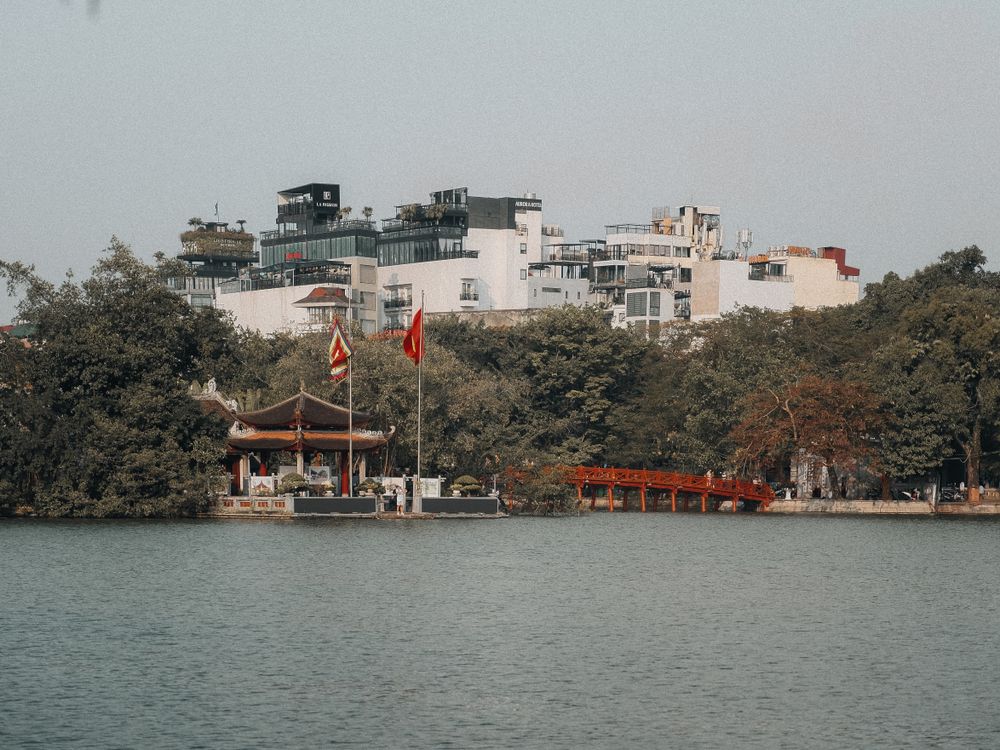
Hanoi is Vietnam's capital, and it feels like it — a thousand years old, a little chaotic, and completely itself.
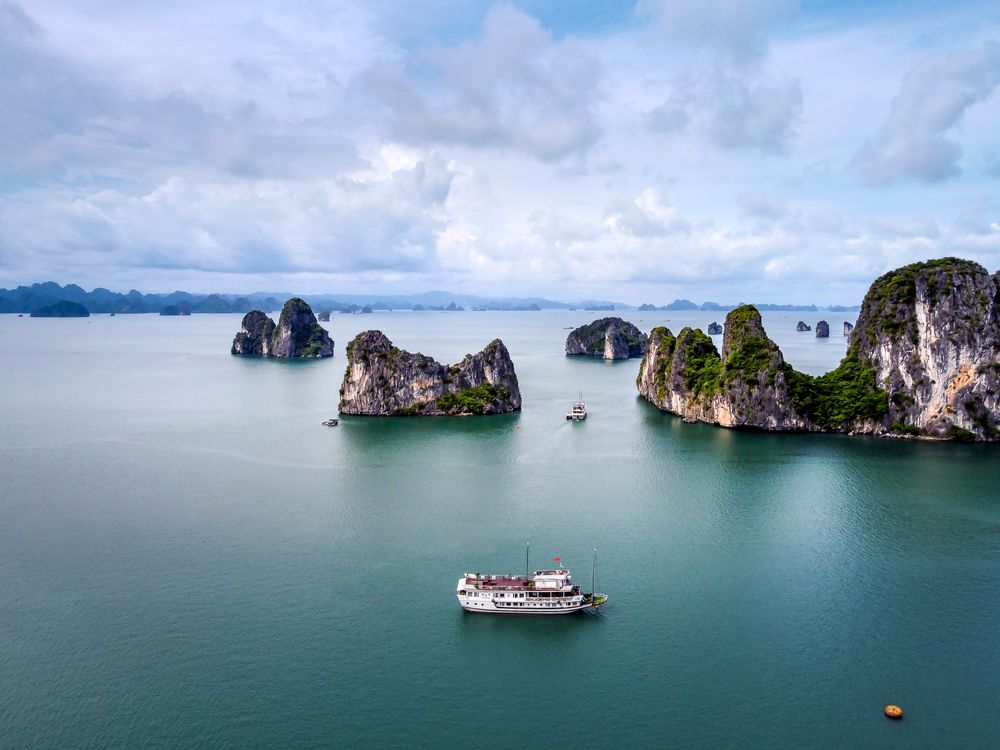
Ha Long Bay is the postcard of Vietnam: nearly 2,000 limestone islands rising out of emerald water in the Gulf of Tonkin, about 170 km east of Hanoi.

Sa Pa sits high in the Hoang Lien Son mountains of north-west Vietnam, about 320 km from Hanoi, near the Chinese border.
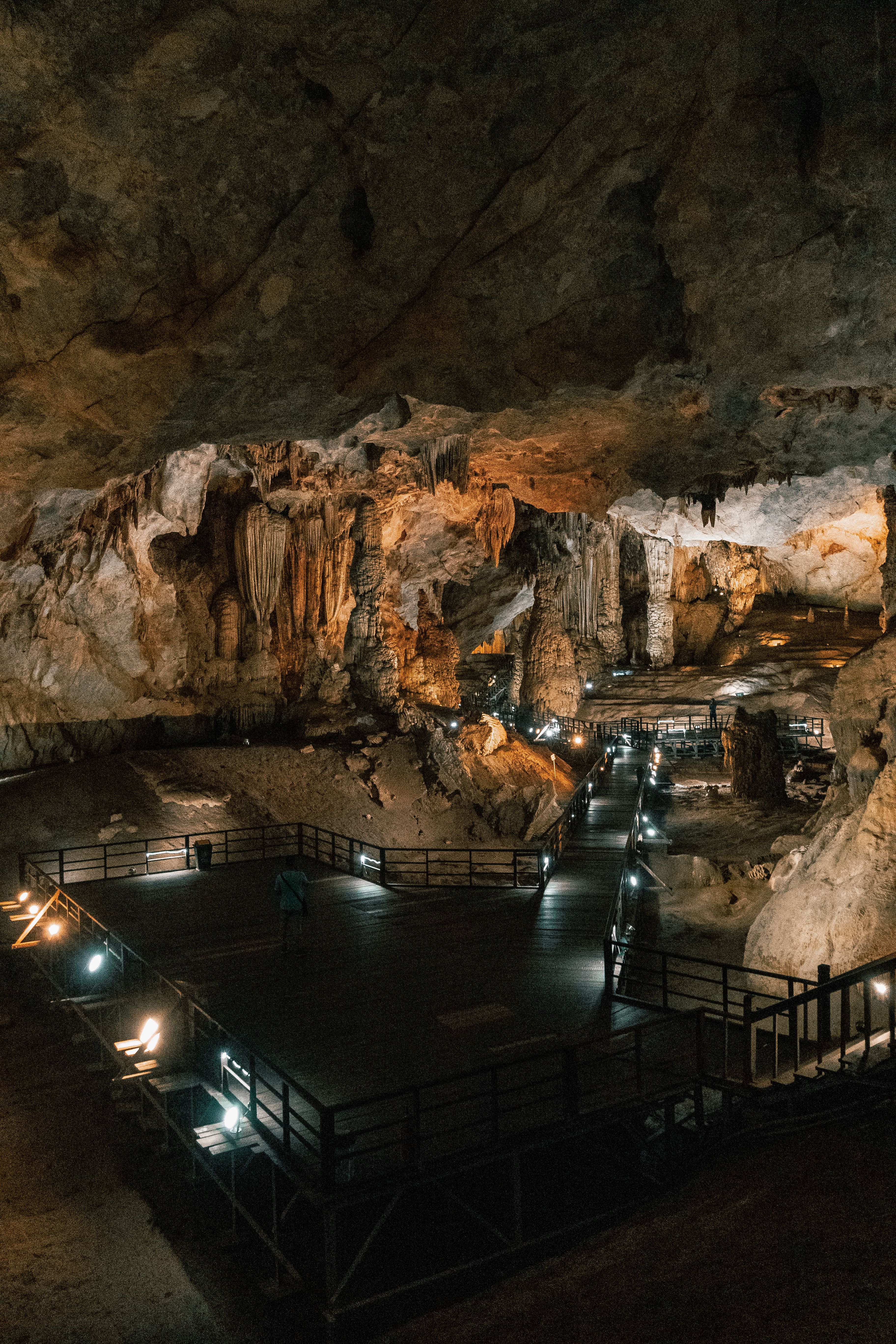
Phong Nha is a small, sleepy town on the Son River in central Vietnam, and the gateway to Phong Nha-Ke Bang National Park — a UNESCO World Heritage site and one of the great cave landscapes on Earth.
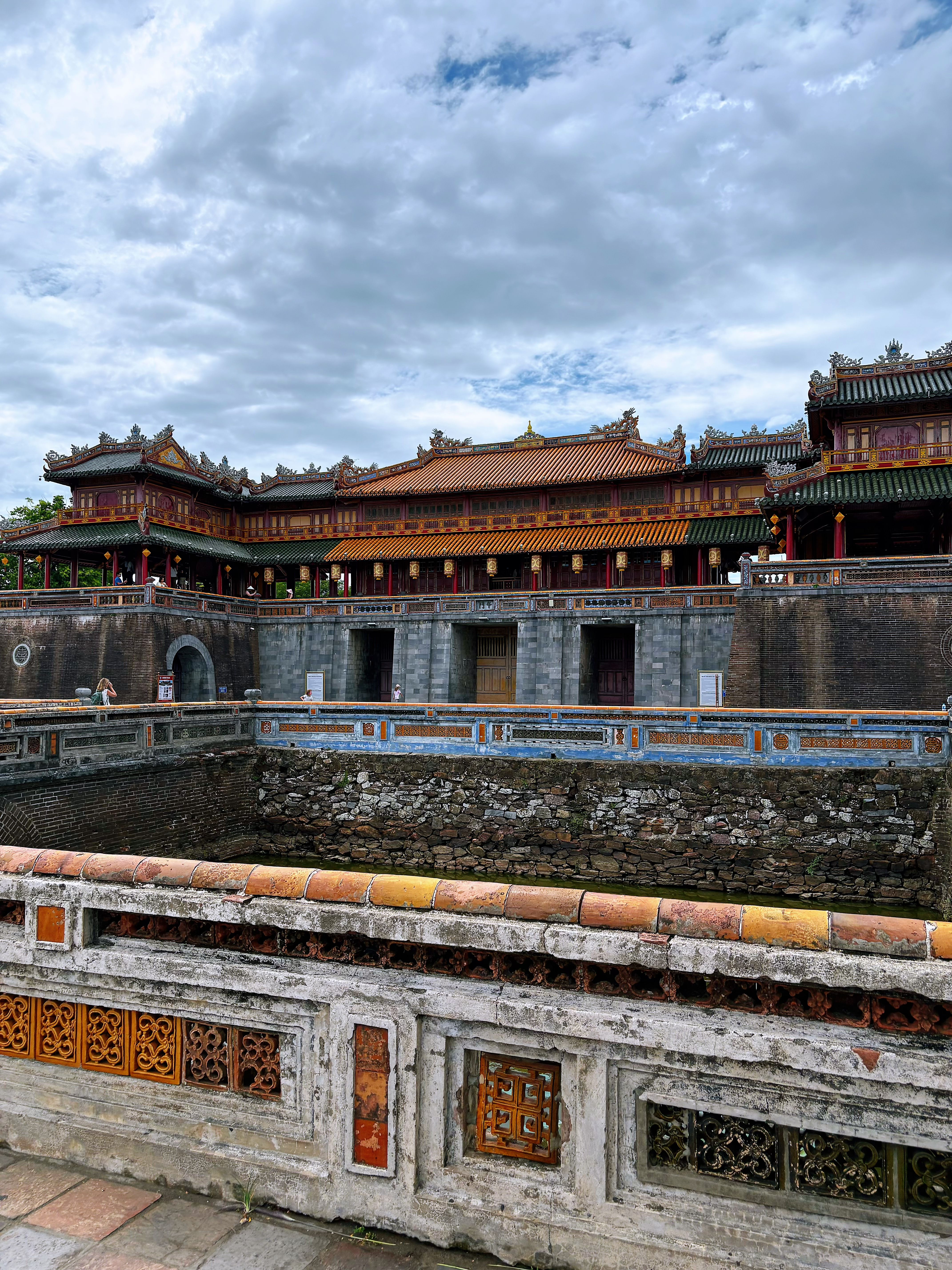
Hue is Vietnam's old imperial capital — slower, quieter and more graceful than Hanoi or Ho Chi Minh City.
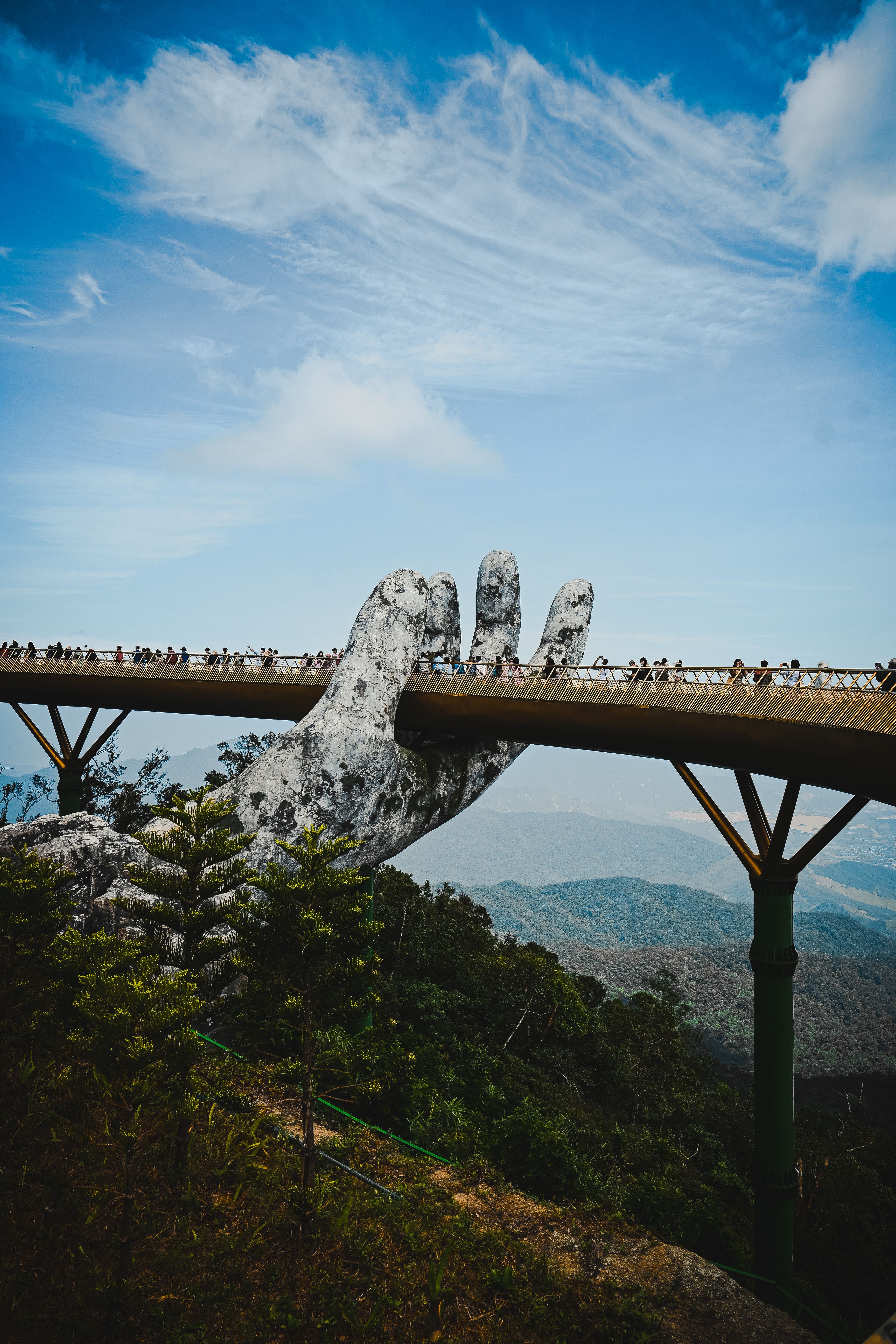
Da Nang sits on Vietnam's central coast, where the Han River meets the South China Sea.